
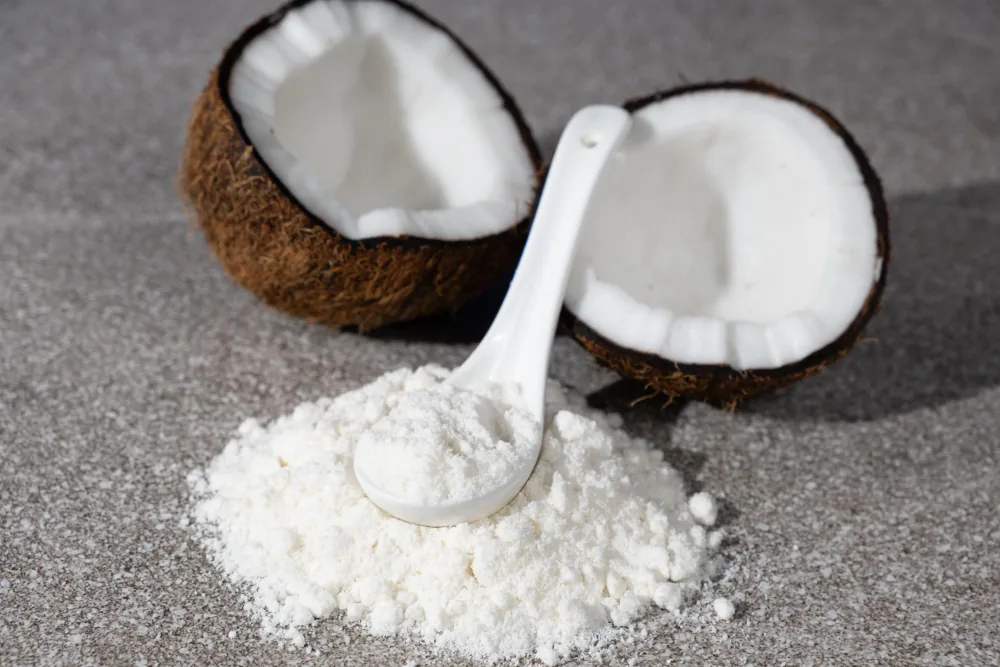
Coconut has moved from a niche flavor into a mainstream menu driver. Luckin Coffee’s Coconut Latte, launched in April 2021, passed 700 million cups sold by its third anniversary (DAO Insights, 2024). On the ingredient side, Meticulous Research projects the global coconut milk powder market to reach USD 409.9 million by 2032, growing 9 percent a year from 2025. For cafe chains and food manufacturers, coconut creamer in powder form is the most practical way to scale these menus. This guide explains the product types, their uses, and what to check when sourcing in bulk.
What Is Coconut Creamer Powder?
Coconut creamer powder is a dry ingredient that adds coconut flavor and creaminess to beverages and foods. It is made by spray drying, a process that sprays a liquid emulsion into hot air so the water evaporates and a fine powder remains. Three related product types are sold under similar names, and they behave differently in application.
Coconut milk powder is spray-dried coconut milk. Before drying, the coconut milk is usually blended with a carrier such as maltodextrin and often with sodium caseinate, a milk protein that prevents clumping. Its oil content can reach about 61 percent (Tetra Pak Coconut Handbook). Coconut cream powder is usually positioned for a richer coconut profile, in line with the Codex STAN 240-2003 distinction between coconut milk, with at least 10 percent fat, and coconut cream, with at least 20 percent fat. Coconut creamer combines vegetable oil, carriers, and coconut milk or coconut flavor into a creamer system designed for consistent taste and stability in drinks.
Names are used loosely in the market, so the label alone does not tell you the composition. Always compare ingredient lists and fat content on the specification sheet. The table below summarizes the typical differences.
| Type | Typical composition | Coconut flavor | Typical uses |
|---|---|---|---|
| Coconut milk powder | Spray-dried coconut milk with a carrier such as maltodextrin, often with sodium caseinate | Natural, mild to medium | Curries, sauces, desserts, beverages |
| Coconut cream powder | A richer coconut base or a formulation designed for a fuller coconut profile | Rich | Beverages, bakery, biscuits, seasoning |
| Coconut creamer | Vegetable oil, carriers, and coconut milk or coconut flavor | Balanced and consistent | Coffee, tea, cafe beverages, 3in1 mixes |
How Are Coconut Creamer and Coconut Milk Powder Used?
Coconut milk powder uses span both food service and industrial production. The four application groups below account for most demand.
Cafe Beverages
Coconut lattes, coconut cold brew, coconut matcha, and coconut milk tea all depend on a coconut base that dissolves quickly and tastes the same in every outlet. Powder makes this easier than fresh or liquid coconut milk, because each serving can be measured by weight and stored at room temperature. Chains can also blend coconut powder into a single premix to reduce steps at the bar. See how powder ingredients perform in drinks on our beverage applications page.
Desserts and Ice Cream
Coconut powder adds body and flavor to puddings, soft serve, and frozen desserts. Because it is dry, manufacturers can control solids content more precisely than with liquid coconut milk.
Bakery and Biscuits
In cakes, cookies, and biscuit creams, coconut powder delivers flavor without adding water to the dough or filling. This helps keep texture and shelf life within specification.
Savory Seasoning and Ready Meals
Coconut powder is widely used in curry bases, soup mixes, and seasoning blends. It replaces fresh coconut milk in recipes where a long shelf life and simple handling matter. For background on coconut milk and its alternatives in cooking, read Coconut Milk and Milk Substitute Cream in Food.
Read also: Get to Know More About Coconut Oil and Its Benefits
What to Check When Choosing a Coconut Milk Powder Supplier
A reliable coconut milk powder supplier should be able to answer five technical questions before you place a bulk order.
Fat Content and Specification
Ask for a written specification covering fat content, moisture, and the fat source. Fat content drives both flavor intensity and cost per serving, so compare products on the same basis.
Solubility and Stability
Test the powder in hot and iced drinks, and in acidic applications such as coffee and fruit teas. A good coconut creamer dissolves without lumps and does not separate or feather when it meets hot coffee.
Allergen Status
Check whether the formula contains sodium caseinate or other dairy ingredients. This affects allergen labeling and whether the product can be marketed as dairy-free or plant-based.
Shelf Life and Packaging
Confirm the shelf life for the specific pack size you will order, and check that the packaging has a moisture barrier suited to your climate and storage conditions.
Certifications and Documents
Request current food safety certificates, a certificate of analysis (COA) for each lot, and any halal or market-specific documents your destination country requires.
Read also: Plant Based Creamer: A Vegan, Dairy-Free Guide
Why Source Coconut Powder from Indonesia?
Indonesia is the world’s second-largest coconut producer after the Philippines. Data from the International Coconut Community and Indonesia’s Ministry of Agriculture put national output at about 2.87 million tons of copra equivalent in 2023, roughly 24 percent of global production (Antara News, 2026). This gives Indonesian manufacturers close access to coconut raw materials, and the country also has established spray drying capacity and export experience in powder ingredients.
PT Lautan Natural Krimerindo (LNK) produces Lautan Premix Coconut Cream Powder, made through spray drying from coconut milk. It delivers a fresh coconut aroma, a balanced creamy taste, and good solubility for beverages, bakery, biscuits, and seasoning blends. For chains that want a signature coconut base or premix under their own brand, LNK also offers OEM and toll manufacturing services. LNK operates under FSSC 22000 and ISO 9001 and exports to Asia, the Middle East, Oceania, the Americas, Europe, and Africa.
Bulk Ordering Tips for Cafe Chains and Manufacturers
A structured ordering process prevents surprises when a coconut menu rolls out across outlets or production lines.
- Request samples and run trials in your actual recipes, hot and iced.
- Fix the dosage in a standard recipe before scaling up.
- Agree on a specification and request a COA for every lot.
- Discuss MOQ and lead time early, since both are agreed per project based on formula, packaging, and volume.
- Train outlet staff to keep opened packs sealed and stored in a cool, dry place.
Frequently Asked Questions About Coconut Creamer
Below are short answers to questions that cafe chains and manufacturers often ask when evaluating coconut powders.
Is coconut creamer dairy-free?
Not always. Many coconut creamers and coconut milk powders contain sodium caseinate, a milk protein that improves stability and prevents clumping. If your menu or product must be dairy-free, check the ingredient list and ask the supplier for a caseinate-free formulation.
What is the difference between coconut milk powder and coconut cream powder?
Coconut milk powder is spray-dried coconut milk with a carrier such as maltodextrin. Coconut cream powder is usually positioned for a richer coconut profile. Product names are used loosely in the market, so compare the ingredient list and fat content on the specification sheet.
How do you use coconut milk powder in coffee?
Dissolve the powder in a small amount of hot water or hot espresso first, then add the remaining liquid or ice. Pre-dissolving prevents lumps in iced drinks. Set the dosage through a small trial batch and record it in the standard recipe.
What is the shelf life of coconut cream powder?
Coconut powders typically last 12 to 24 months unopened, depending on the formulation and packaging. After opening, keep the powder sealed in a cool, dry place away from strong odors and direct sunlight.
Conclusion
Coconut creamer powder lets cafe chains and manufacturers serve coconut menus with consistent taste, simple storage, and predictable cost. Choose the product type that fits your application, compare suppliers on specification, solubility, allergen status, and documentation, and validate everything through trials before scaling. Indonesia’s coconut supply and powder processing base make it a practical sourcing option for bulk buyers.
If you are planning a coconut beverage line or need coconut cream powder in bulk, contact the LNK team to request specifications or samples.
0 Comments