



The enthusiasm of LNK employees participating in the Creamy Party event at PT Lautan Natural Krimerindo head office
As days of work are becoming ever more urgent, practical food has entered into everyday existence for many people. Whether you’re consuming breakfast before work, lunch during busy work hours or dinner at the end of a long commute, meals that are easy to make are often the new top choice.
However, when convenience becomes a priority, nutritional balance can easily be overlooked. One of the challenges is getting enough fiber through adequate fruit and vegetable consumption. The desire to eat healthier often comes up against routines that leave little time for preparing well-balanced meals.
When Eating Habits Fall Short of Nutritional Needs

Distribution of FiberCreme creamy noodle portions to employees during the LNK Creamy Party
Low fruit and vegetable consumption remains a concern in Indonesia. The 2023 Indonesian Health Survey (SKI) reported that 96.7% of Indonesians aged five and above did not consume enough fruits and vegetables. In addition, 67.5% consumed only one to two portions per day.
These figures highlight a gap between everyday eating habits and recommended dietary intake. The World Health Organization (WHO) recommends consuming at least 400 grams, or approximately five portions, of fruits and vegetables per day for adults and children over the age of 10. WHO also recommends a minimum intake of 25 grams of naturally occurring dietary fiber per day for the same age group.
Meeting these recommendations is not only about understanding the importance of nutrition, but also about finding ways to incorporate it into everyday routines. With busy schedules, preparing meals with a diverse nutritional composition every day can be a challenge in itself.
Finding a More Practical Way to Eat Better
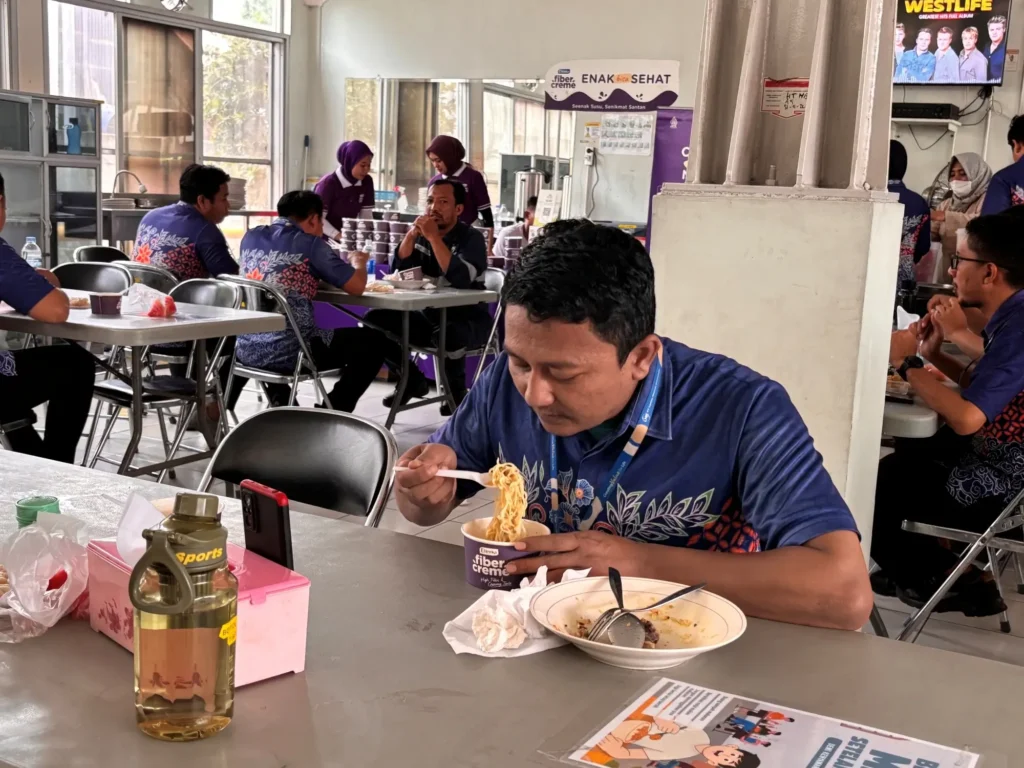
LNK employees enjoying FiberCreme instant noodle dishes during the Creamy Party event
For urban consumers, time is often one of the considerations when choosing what to eat. High mobility, demanding schedules, and limited time for cooking make easy-to-prepare meals a practical fit for everyday life.
This means choosing practical food does not necessarily mean that consumers are overlooking their health. The challenge lies in finding a balance between convenience, taste, and nutritional needs.
Improving eating habits does not always have to start with completely changing the daily menu. Simple steps, such as adding vegetables to familiar dishes, choosing fruit as a snack, or paying closer attention to the nutritional content of food, can be a more realistic starting point.
This also creates an opportunity for food innovation to become more relevant to consumers’ everyday habits. Rather than requiring major lifestyle changes, food ingredients can be developed to work easily with familiar meals and recipes.
At the same time, convenience still needs to be balanced with mindful choices. Not every practical meal automatically provides a balanced nutritional composition, making dietary variety and adequate nutrient intake important considerations.
Food Innovation That Fits into Everyday Life
For the food industry, these consumer needs create an opportunity to develop innovations that offer not only convenience, but also added value. One approach is developing food ingredients that can be incorporated into a variety of everyday meals.
Creamie is one example of this approach. Made with FiberCreme to create a creamy texture, this noodle creation offers a creamy taste without feeling overly heavy, while also providing added fiber depending on the formulation and amount used.
For PT Lautan Natural Krimerindo (LNK), innovations like this demonstrate how food ingredients can be utilized to meet consumer needs through creations that fit naturally into everyday life. Familiar meals can become an opportunity to explore new taste experiences while adding nutritional value.
Of course, a single dish cannot replace the need for a varied and balanced diet. Consuming fruits, vegetables, and other sources of fiber remains important in supporting daily nutritional needs.
Ultimately, eating healthier does not always mean changing every habit at once. Sometimes, small changes that fit naturally into existing routines are easier to maintain consistently. With relevant food choices and innovation, convenience and better nutrition do not necessarily have to be two opposing priorities.
Reference
Badan Kebijakan Pembangunan Kesehatan, Kementerian Kesehatan Republik Indonesia. (2024). Survei Kesehatan Indonesia (SKI) dalam Angka. https://www.badankebijakan.kemkes.go.id/repositori/id/eprint/5539/
Badan Kebijakan Pembangunan Kesehatan, Kementerian Kesehatan Republik Indonesia. (n.d.). Hasil Utama SKI 2023. https://www.badankebijakan.kemkes.go.id/daftar-frequently-asked-question-seputar-hasil-utama-ski-2023/hasil-utama-ski-2023/
World Health Organization. (2026, January 26). Healthy diet. https://www.who.int/news-room/fact-sheets/detail/healthy-diet
0 Comments